
In This Article
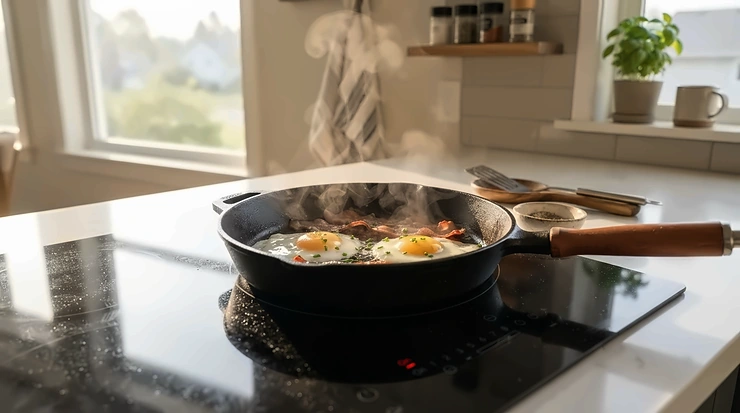
A PFAS-free nonstick frying pan for daily eggs is a skillet whose cooking surface releases eggs without a fluoropolymer coating such as PTFE. Most use a ceramic sol-gel layer, while seasoned carbon steel and cast iron build their own slickness. The goal is simple: dependable egg release, minimal oil, and no “forever chemicals” in your breakfast.
Eggs are the polygraph test of cookware. A pan can sear a steak and brown a chicken thigh, then fall apart the moment a delicate over-easy meets a surface that grips a little too hard. Now add a second test. If you crack eggs seven mornings a week, whatever sits under them touches your food roughly 350 times a year.
That’s why the PFAS question matters. The EPA’s overview of PFAS risks explains that thousands of these manufactured chemicals exist. It says exposure to certain PFAS may be harmful, and that older ones like PFOA and PFOS were replaced in the U.S. by other PFAS. There’s an honest caveat too. How much risk an intact, gently used PTFE pan adds is still debated, and industry groups argue that some nonstick PFAS are safe when properly made. Plenty of cooks simply prefer to skip the argument.
So I dug through lab reports, expert reviews, and aggregated owner feedback to rank seven real pans, from budget ceramic to an uncoated steel alternative. Along the way you’ll learn what PFOA free certification actually means, what a genuine PTFE-free surface looks like, and how to squeeze reliable egg release out of any of them. Prices below are ranges only, so check current price before buying.
Quick Comparison: PFAS-Free Egg Pans at a Glance
Before the deep dive, here’s the cheat sheet. I’ve ordered the pans roughly from budget to premium, with the uncoated carbon steel option last as the “no coating at all” alternative. Price ranges reflect what I found during research and will drift, so treat them as ballparks.
| Pan | Surface | Best For | Price Range |
|---|---|---|---|
| SENSARTE Nonstick Ceramic Frying Pan (8-Inch) | PFAS-free ceramic | Tight budgets, one-to-two-egg breakfasts | Around $20-$25 |
| Blue Diamond 8-Inch Ceramic Frying Pan | PFAS-free ceramic | Lightweight, low-cost omelet flipping | Around $20-$25 |
| OXO Enhanced 8-Inch Ceramic Frying Pan | PFAS-free ceramic | Hard-anodized durability at a mid price | Roughly $30-$50 |
| GreenPan Valencia Pro 8-Inch Ceramic Frypan | PFAS-free ceramic | Best-documented ceramic durability | Roughly $45-$70 |
| Caraway Nonstick Ceramic Fry Pan (10.5-Inch) | PFAS-free ceramic | Third-party-tested coating, design lovers | $110-$130 range |
| Our Place Always Pan 2.0 (10.5-Inch) | PFAS-free ceramic | One pan for eggs, steaming, and braising | $130-$150 range |
| Lodge Seasoned Carbon Steel Skillet (10-Inch) | Seasoned steel, no coating | A decade-plus egg pan | $35-$50 range |
Looking at the comparison above, the SENSARTE and Blue Diamond pans offer the cheapest way into PFAS-free cooking, but both are best treated as replaceable. The GreenPan Valencia Pro is the value sweet spot if you want a longer warranty and strong lab durability data. Caraway and Always Pan 2.0 charge a premium for design and published lab results rather than dramatically better egg release. If you never want to replace a coating again, the Lodge Seasoned Carbon Steel Skillet trades convenience for longevity.
💬 Just one click — help others make better buying decisions too!😊
Top 7 Picks for a PFAS-Free Nonstick Frying Pan for Daily Eggs: Expert Analysis
Each entry pairs real specs with what they mean at the stove, plus the themes that surface repeatedly in aggregated owner reviews. I haven’t cooked on these pans myself. What follows is spec analysis and review synthesis, not a lab diary.
1. SENSARTE Nonstick Ceramic Frying Pan (8-Inch) — cheapest ticket into PFAS-free eggs
The 8-inch size is the real standout. It fits a two-egg breakfast almost exactly, so heat stays concentrated right where the eggs sit.
Listings describe a PFAS-free ceramic coating on a cast aluminum body, an induction-compatible base, and an oven rating around 550°F. In practice, that induction base means it works on nearly any cooktop. The oven tolerance lets a frittata finish under heat, though eggs rarely need more than medium on the stovetop. Based on the spec comparison, this is a smart test drive if you’re curious about a PFAS-free nonstick frying pan for daily eggs without a big commitment.
What the sticker price hides is longevity. Ceramic at this tier works best as a consumable you replace, not an heirloom. One practical catch is that SENSARTE also sells a “Swiss Granite” pan whose listing says only PFOA-free. Confirm the page you’re on says PFAS-free or PTFE-free before you click.
Reviewers consistently praise how cleanly eggs slide out during the first several months. A recurring complaint is coating wear or peeling edges around the six-month mark with daily use.
Pros:
- ✅ Right-sized for one-to-two-egg breakfasts
- ✅ Induction-compatible base fits any stovetop
- ✅ Strong egg release in the early months
Cons:
- ❌ Coating wear reported around six months
- ❌ Hand-washing needed to protect the surface
Expect roughly $20-$25 at the time of research, and check current price since it fluctuates. The value is strong if you accept periodic replacement and weak if you expect years of service.
2. Blue Diamond 8-Inch Ceramic Frying Pan — featherweight pan for fast omelet flips
The standout is weight. Consumer Reports found Blue Diamond pans among the lighter ones in its tests (its 10-inch model weighed about 1.7 pounds), which matters when you flip omelets one-handed before work.
The listing describes a diamond-infused, PFAS-free ceramic coating on an aluminum body with a stainless steel handle, and says it’s dishwasher and oven safe. One reviewer points out the “diamond” is dust mixed into the coating, so treat it as marketing garnish rather than a durability guarantee. Still, Consumer Reports’ lab work rated the pan top-notch for cooking evenness and food release. That’s exactly the combination you want from a non toxic egg pan for omelets.
Here’s what to weigh: the lab praise came with a durability caveat, and owner feedback lines up. Some reviewers call it a great starter ceramic pan. Others report food started sticking within months, despite plastic utensils, medium heat, and hand washing. A few also mention sticky residue on glass cooktops. On paper, that makes it a decent but disposable choice.
Pros:
- ✅ Very light for easy one-handed flipping
- ✅ Lab-tested evenness and food release praised
- ✅ Among the cheapest PFAS-free pans around
Cons:
- ❌ Several owners report sticking within months
- ❌ Residue complaints on glass cooktops
Expect around $20-$25, and check current price. It’s fine value as a starter pan, but budget for replacement.
3. OXO Enhanced 8-Inch Ceramic Nonstick Frying Pan — hard-anodized body that resists warping
The standout is the hard-anodized aluminum body, which OXO says delivers better heat conduction and scratch resistance than basic aluminum. For eggs, that translates to fewer hot spots, and hot spots are what turn over-easy into scrambled.
OXO describes a diamond-enhanced, PFAS-free ceramic coating with a stainless steel handle and dishwasher-safe construction. Listings cite an oven limit near 430°F and don’t advertise induction compatibility. The oven limit is irrelevant for eggs, but induction owners should look elsewhere. Listings also cite a top ranking from Cook’s Illustrated. I couldn’t verify the full test, so treat that as a pointer to check rather than gospel.
What most buyers overlook is how much a sturdy body matters over time. A pan that stays flat keeps full contact with the burner, and that keeps egg release consistent. Owners describe the surface as unbelievably slick, and some report pans going strong for years. One heavy-use reviewer said their first 10-inch lost its nonstick after about a year, which is a realistic expectation for daily ceramic cooking.
Pros:
- ✅ Hard-anodized body resists scratches and warping
- ✅ Stainless handle feels sturdy and oven-ready
- ✅ Slick PFAS-free surface for low-oil eggs
Cons:
- ❌ Not advertised for induction cooktops
- ❌ Lower oven ceiling than most rivals
Roughly $30-$50 for a single pan depending on size and retailer, so check current price. It’s good mid-range value for gas and electric cooks.
4. GreenPan Valencia Pro 8-Inch Ceramic Frypan — best lab-backed durability in ceramic
The standout is how well the coating handled abuse in Consumer Reports’ testing. It was rated excellent at withstanding up to 2,000 strokes of steel wool, a harsh simulation of metal utensils and scouring.
The GreenPan Valencia Pro pairs a hard-anodized aluminum body with a ceramic coating. It’s oven safe to 600°F, induction compatible, dishwasher safe, and backed by a 2-year limited warranty. The Ecology Center’s Healthy Stuff Lab tested a GreenPan pan in 2021 and found it matched its PFAS-free and PTFE-free claims. Taste of Home’s editors also rated GreenPan ceramics best overall among those they tested. For daily egg duty, the warranty is a quiet differentiator, because it signals what the maker expects for coating life.
Honest analysis says not to overread the lab test. Abrasion resistance isn’t the same as years of thermal cycling. Reviewer accounts on retail pages include daily omelet cooking for months without sticking, while others report durability disappointments. The maker advises butter or oil instead of aerosol sprays, which can leave residue that dulls release.
Pros:
- ✅ Standout steel-wool abrasion result in lab testing
- ✅ 2-year limited warranty and 600°F oven rating
- ✅ Induction compatible and dishwasher safe
Cons:
- ❌ Mixed long-term durability reports from owners
- ❌ Aerosol sprays can shorten surface life
Roughly $45-$70 depending on size at the time of research, so check current price. It’s the best all-around value if you want documented durability without paying luxury prices.
5. Caraway Nonstick Ceramic Fry Pan (10.5-Inch) — most documented third-party testing
The standout is paperwork. Published Light Labs results show no detectable PFAS, PTFE, lead, or cadmium on Caraway’s cooking surfaces. “Not detected” means below the lab’s reporting limits, not literally zero, but that’s still more transparency than most brands offer.
The 10.5-inch pan pairs an aluminum core with a sol-gel ceramic coating and a stainless steel handle, weighs about 2.7 pounds, and is oven safe to 550°F on any cooktop. That weight helps heat stay steady, though it’s less nimble than the budget pans for flipping. If your breakfast is mostly eggs, the 8-inch mini (about 1.7 pounds) is the more sensible size.
A long-term review from The Skillful Cook found the pan more durable than most ceramics but still noted the egg release fading after a year, with oil needed to keep eggs moving. Other roundups report a 1-year warranty, short for the price. What the spec sheet won’t tell you is that you’re paying for design, packaging, and documentation, not a coating that defies ceramic’s limits.
Pros:
- ✅ Published third-party lab results for the coating
- ✅ Even, steady heat from a heavier body
- ✅ Oven safe to 550°F and induction friendly
Cons:
- ❌ Premium price for a coating with a finite life
- ❌ Egg release reported to fade after roughly a year
Expect the 10.5-inch at roughly $110-$130, with the mini costing less. Check current price. The value is hardest to justify on durability alone, but the transparency is real.

6. Our Place Always Pan 2.0 (10.5-Inch) — one pan that also steams and braises
The standout is versatility. The Always Pan 2.0 ships with a steamer basket and spatula, and its deep, sloped design is meant to replace several pieces of cookware.
Its Thermakind ceramic coating is described as free of PFAS, lead, and cadmium, over a recycled aluminum body with a stainless steel handle. It’s oven safe to 450°F and works on induction. The leafscore.com review reports that Our Place published Light Labs results in May 2026 covering 689 PFAS and related substances, all below reporting limits. Consumer Reports said the 2.0 performed very well in its testing, which is reassuring.
For eggs specifically, depth is a double-edged sword. It helps with shakshuka and poached-style eggs, but a deep pan makes flipping omelets slightly more awkward than a shallow 8-inch. Homes & Gardens reported that despite careful hand washing, the nonstick performance deteriorated after about a year, which echoes the ceramic category’s general limits. Our Place also offers a mini size around 8.5 inches, a better fit for egg-focused cooks.
Pros:
- ✅ Steamer basket and spatula included
- ✅ Published lab results for PFAS testing
- ✅ Induction compatible and oven safe
Cons:
- ❌ Deep shape is clumsier for flipping omelets
- ❌ Coating decline reported after about a year
Expect roughly $130-$150 for the standard size, so check current price. It’s good value only if you’ll actually use the extras.
7. Lodge Seasoned Carbon Steel Skillet (10-Inch) — uncoated route to PFAS-free egg release
The standout is that there’s no coating to fail. The Lodge Seasoned Carbon Steel Skillet is 12-gauge steel, pre-seasoned at the factory, and weighs about 3.1 pounds. By comparison, Lodge’s own 10-inch cast iron weighs roughly 5.35 pounds, according to The Skillful Cook’s comparison.
This is the purest PTFE-free surface on the list, because the slickness comes from polymerized oil you build and maintain. A University of Maine Extension writer reported better luck cooking eggs in cast iron than in stainless steel while hunting for a PFAS-free egg pan. The Ecology Center likewise recommends uncoated cast iron or stainless as longer-lasting options than ceramic.
The learning curve is real. Preheat patiently, use a little fat, and expect eggs to improve as seasoning deepens. Owners call it brutally tough and some name it their favorite pan, but a few report flatness issues on larger sizes. It isn’t dishwasher safe and it rusts if neglected.
Pros:
- ✅ No coating to peel, chip, or wear out
- ✅ Lighter than comparable cast iron
- ✅ Gets slicker with each seasoning cycle
Cons:
- ❌ Requires seasoning and hand-washing discipline
- ❌ Some owners report uneven or bulged bases
Expect roughly $35-$50, so check current price. It’s the best long-term value here for anyone willing to learn.
Top 7 Side-by-Side: Specs, Prices, and Who Each Pan Fits
The table below condenses the specs that actually change your mornings. The oven limits and induction notes come from listing data, so verify them on the exact variant you buy, since brands sell multiple lines under similar names.
| Pan | Surface | Oven Limit (Listed) | Induction | Review Themes | Price Range |
|---|---|---|---|---|---|
| SENSARTE 8-Inch | PFAS-free ceramic | ~550°F | Yes | Slick early, wear after ~6 months | $20-$25 |
| Blue Diamond 8-Inch | PFAS-free ceramic | Varies by listing | Check listing | Good start, mixed durability | $20-$25 |
| OXO Enhanced 8-Inch | PFAS-free ceramic | ~430°F | Not listed | Slick, mostly durable, some wear at a year | $30-$50 |
| GreenPan Valencia Pro | PFAS-free ceramic | 600°F | Yes | Strong release, mixed longevity | $45-$70 |
| Caraway 10.5-Inch | PFAS-free ceramic | 550°F | Yes | Strong early, oil needed after ~1 year | $110-$130 |
| Always Pan 2.0 | PFAS-free ceramic | 450°F | Yes | Versatile, coating wear after ~1 year | $130-$150 |
| Lodge carbon steel 10-Inch | Seasoned steel | Oven safe | Generally yes | Improves with use, learning curve | $35-$50 |
In practice, the table shows a clear pattern: price doesn’t track egg release nearly as well as it tracks warranty, documentation, and design. The GreenPan Valencia Pro offers the highest oven limit and best-documented durability for the mid-range money. OXO Enhanced is a strong gas-stove choice, while Caraway and Always Pan 2.0 are really purchases of transparency and style. The Lodge carbon steel option is the only one without an expiration date on its surface.
✨ Don’t Miss These Carefully Chosen Pans!
🔍 Take your morning eggs to the next level with these carefully selected options. Click on any highlighted item to check current pricing and availability. The right pan will help you create effortless omelets your whole family will love!
How to Get Reliable Egg Release From a PFAS-Free Pan: A Practical Usage Guide
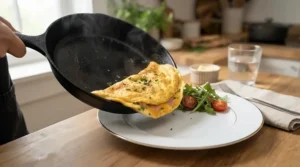
Here’s the secret no listing mentions: egg release depends on technique as much as coating. A ceramic pan treated well can outlast an identical one treated badly by a year or more.
The Daily Egg Routine
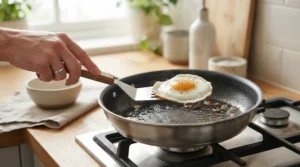
- Preheat gently. Warm the pan over low-to-medium heat for 60 to 90 seconds before adding fat. Ceramic surfaces degrade faster under high heat or thermal shock, and eggs don’t need more than medium anyway.
- Use real fat, not aerosol. A small amount of butter or oil protects the surface. Cooking sprays leave residue that dulls egg release over time, and GreenPan specifically advises against them.
- Cook low and slow. Eggs set beautifully at medium-low, and gentle heat is the single biggest favor you can do for a ceramic coating.
- Let the egg release itself. If it resists the spatula, give it another 20 seconds. Prying early tears the egg and scratches the surface.
Cleaning and Maintenance
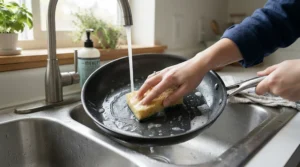
Let the pan cool, then wash by hand with a soft sponge. Skip the dishwasher even if a listing says it’s safe, since heat and detergents are the usual suspects in coating decline. If you notice a gummy film from polymerized oil, a paste of baking soda and water on a soft sponge usually lifts it.
Common Mistakes in the First 30 Days
Most early failures come from three habits: blasting heat to “speed things up,” stacking pans without a protective liner, and pouring cold water into a hot pan. For the Lodge carbon steel option, the equivalent mistakes are skipping the thin oil wipe after cleaning and leaving it wet in the rack.
Real-World Scenarios: Which Pan for Which Egg Eater
Specs only matter when matched to a real kitchen. Here are three profiles with the reasoning behind each pick.
The apartment cook on an induction hob. You make one or two eggs most weekdays, you’re watching money, and your cooktop is induction. The SENSARTE 8-inch fits the budget, the size, and the induction base. Plan to replace it around the one-year mark, which still works out to pennies per egg breakfast.
The family kitchen. You scramble for kids on school mornings and do omelets on weekends, and the dishwasher is tempting. The GreenPan Valencia Pro or OXO Enhanced makes more sense, with sturdier hard-anodized bodies and clear warranty or listing details. Hand-washing remains gentler, but the bigger body copes better with the daily load.
The “buy it once” cook. You cook eggs every day and hate replacing things. The Lodge Seasoned Carbon Steel Skillet is the sturdy choice, accepting a few weeks of learning curve in exchange for a pan that can last for years. Pair it with an inexpensive ceramic pan for the mornings you’re tired and want zero fuss.
Egg Troubles, Solved: A Problem-to-Solution Guide
Even the best pan occasionally misbehaves. These are the five most common problems and what actually fixes them.
Problem: eggs suddenly stick after a few months. The coating’s top layer has likely dulled from heat or residue. Try a gentle baking soda clean and switch to lower heat. If sticking persists, the pan is reaching end of life, which is normal for budget ceramics like the SENSARTE or Blue Diamond.
Problem: gummy brown film on the surface. That’s polymerized oil. Scrub gently with warm, soapy water and a soft sponge, and avoid aerosol sprays going forward.
Problem: the pan rocks on the burner. Thin bases warp. A hard-anodized body like the OXO Enhanced or GreenPan Valencia Pro resists this better than light aluminum.
Problem: visible flaking or peeling. Stop using the pan. Homes & Gardens advises discarding pans that chip or flake, and it’s good advice.
Problem: carbon steel eggs welded in place. The seasoning is thin. Heat the Lodge carbon steel pan, wipe on a whisper of oil, and repeat a few cycles before cooking eggs again.
How to Choose a PFAS-Free Nonstick Frying Pan for Daily Eggs
Shopping for a PFAS-free nonstick frying pan for daily eggs is easier with a checklist. Work through these seven steps in order.
- Look for explicit wording. Seek “PFAS-free” or “PTFE-free,” not just “PFOA-free,” because the latter describes almost every nonstick pan sold today.
- Prefer third-party lab data. Published reports from labs like Light Labs beat a vague “non-toxic” claim, though “not detected” still means below reporting limits.
- Size down for eggs. An 8-inch pan suits one or two eggs, while 9.5 to 10 inches suits omelets. Smaller surfaces are easier to heat evenly.
- Check the base. Hard-anodized or thick cast aluminum resists warping, and an induction plate matters only if you cook on induction.
- Match the oven rating to your habits. Eggs rarely need more than medium, so a 430°F ceiling is fine unless you plan frittatas.
- Read the warranty. A 2-year warranty hints at expected coating life more honestly than any marketing copy.
- Plan the care routine. If you won’t hand-wash, buy a sturdier body or consider steel instead.
PFOA Free Certification, PTFE-Free Surface, and PFAS-Free: Decoding the Labels
Labels are where shoppers get burned. PFOA was phased out of U.S. cookware manufacturing around 2015, so PFOA free certification no longer separates safe pans from questionable ones. A PTFE pan can be “PFOA-free” and still contain PFAS, because PTFE itself is a PFAS.
The Ecology Center’s Healthy Stuff Lab tested nonstick pans in 2021 and found Scanpan and Zwilling pans coated with PTFE despite PFOA-free marketing. The GreenPan pan it tested matched its PFAS-free and PTFE-free claims. California’s Safer Food Packaging and Cookware Act bans misleading claims like “PFOA-free” when other PFAS are present, which tells you how common the confusion is.
What you want is a genuine PTFE-free surface, plus clear language. Homes & Gardens notes that “non-toxic” has no regulated definition. If you’re specifically hunting for a PTFE-free nonstick pan for eggs, favor listings that say PTFE-free or PFAS-free outright and ideally link to lab data.
Remember too that ceramic isn’t magic. The Ecology Center notes ceramic coatings may lose nonstick performance or chip over time, and recommends uncoated cast iron or stainless steel as longer-lasting options. For existing PTFE pans, it advises against heating above 500°F or letting them boil dry.

PFAS-Free Ceramic vs PTFE vs Seasoned Steel: Where Each Wins
Choosing a surface type matters more than choosing a brand. Here’s how the three families compare for daily eggs.
| Feature | PFAS-Free Ceramic | PTFE Nonstick | Seasoned Carbon Steel / Cast Iron |
|---|---|---|---|
| Fresh egg release | Very good | Excellent | Good, improves with use |
| Typical longevity | Months to a couple of years | Often longer than ceramic | Decades with care |
| Heat tolerance | Best kept at medium or below | Fumes possible above ~500°F | Very high |
| PFAS status | PFAS-free if verified | PTFE is a PFAS | PFAS-free |
| Upkeep | Hand-wash, gentle heat | Low, but avoid overheating | Seasoning and drying |
| Best For | GreenPan Valencia Pro, OXO Enhanced | Convenience seekers who accept PFAS | Lodge carbon steel and Lodge cast iron skillet |
Looking at the comparison above, PTFE still wins on pure convenience, and I’d be misleading you to pretend otherwise. But ceramic closes most of the gap for fresh egg release, and steel wins outright on lifespan. For most people with a PFAS-free goal, ceramic is the easy daily driver and the Lodge carbon steel pan is the long-game backup.
Common Mistakes When Buying a Non Toxic Egg Pan for Omelets
A non toxic egg pan for omelets should be shallow, light, and responsive. These are the pitfalls that trip up most buyers.
Trusting “non-toxic” at face value. It has no regulated meaning. Look for PFAS-free or PTFE-free wording plus lab evidence.
Buying a giant set for a tiny job. Eggs are a small-pan task, and sets inflate the cost without improving egg release.
Mixing up product lines. Even within one brand, different lines carry different claims, like the SENSARTE Swiss Granite listing labeled only PFOA-free.
Ignoring the base. A thin, light body warps and heats unevenly, which tears omelets.
Judging by day one. Almost any new ceramic pan releases eggs beautifully. Read reviews from owners at six and twelve months instead.
Skipping the care plan. The dishwasher, aerosol sprays, and high heat quietly shorten the life of Blue Diamond, Caraway, and every other ceramic pan.
Long-Term Cost and Maintenance: What Daily Eggs Really Cost You
Sticker price and cost per use are different stories. Here’s the illustrative math, using round numbers and assuming one egg session a day.
A pan around $25 that lasts a year works out to roughly 7 cents per use. A pan around $120 that lasts 18 months lands near 22 cents. A $40 carbon steel pan that lasts five years comes to about 2 cents. These are illustrations, not guarantees, but they show why expensive ceramic isn’t automatically better value. The Caraway and Always Pan 2.0 premiums buy transparency and design, not a longer expected coating life.
Maintenance costs are mostly time. Ceramic wants hand-washing and gentle heat, while Lodge carbon steel wants a quick dry and an occasional oil wipe.
There’s also a regulatory tailwind. Minnesota’s ban on cookware with a PFAS nonstick surface began in 2025, and Colorado, Maine, and Vermont added cookware restrictions on January 1, 2026, with other states staging their own dates. Safer States’ 2026 roundup is a handy tracker. Buying PFAS-free now means fewer surprises later.
Features That Actually Matter (And Those That Don’t)
Marketing loves a long feature list. Most of it is noise.
What matters:
- Egg release. The surface chemistry and its condition decide whether eggs slide or tear.
- Base quality. A flat, sturdy body keeps contact with the burner and prevents hot spots.
- Honest labeling. Explicit PFAS-free or PTFE-free wording plus lab data.
- Size. Eight to ten inches is the egg sweet spot.
- Warranty. A signal of expected coating life.
What doesn’t:
- “Diamond-infused” claims. Per reviewers, it’s dust in the coating, not a promise of durability.
- Dishwasher-safe badges. Tempting, but hand-washing is gentler on any ceramic.
- Fancy colors. Pretty, but irrelevant to egg release.
- Included extras. A steamer basket is nice only if you’ll actually use it.
FAQ
❓ Where can I verify whether a pan is truly PFAS-free?
❓ How long will a ceramic egg pan last with daily use?
❓ Can I use metal utensils on a PFAS-free ceramic pan?
❓ Should I buy a single 8-inch pan or a full set?
❓ Is carbon steel a better non toxic egg pan for omelets than ceramic?
Conclusion: Which PFAS-Free Pan Should You Buy?
Choosing a PFAS-free nonstick frying pan for daily eggs comes down to how you cook and how much replacement you’ll tolerate. If you want the safest bet for most households, the GreenPan Valencia Pro combines strong lab durability data, a 2-year warranty, and a mid-range price. If you’re on a tight budget, the SENSARTE and Blue Diamond pans offer the cheapest entry, with the understanding that they’re replaceable. OXO Enhanced suits gas-stove cooks who want a sturdy hard-anodized body.
If transparency and design matter more than price, Caraway and the Always Pan 2.0 publish lab results and look great on a stovetop, though neither is likely to outlast a good mid-range ceramic. And if you’re tired of replacing coatings, the Lodge Seasoned Carbon Steel Skillet is the long-game choice, with a learning curve that pays off.
Whatever you pick, protect it. Gentle heat, real fat instead of aerosol, and hand-washing will do more for your egg release than any feature on a spec sheet.
Recommended for You
- Oven Safe Nonstick Skillet for Cornbread: 7 Best Picks 2026
- Small Nesting Cookware Set for Dorm Room: 7 Smart Picks (2026)
- Nonstick Cookware Set for Glass Top Stove: 7 Smart Picks 2026
Disclaimer: This article contains affiliate links. As an Amazon Associate, I earn from qualifying purchases. If you purchase products through these links, we may earn a small commission at no additional cost to you.
✨ Found this helpful? Share it with your friends! 💬🤗
